Service requests
Nine productized request types: health check, backup, clone, patching, upgrade, DR drill, archive and purge, restart, and month-end close. Each carries live status you can watch.
The platform
Every Operatives support contract runs on OTeam: a client portal where you see everything, and an engineering workbench where every operation is runbook-driven, gated, and evidenced. Arabic and English, full right-to-left, built in rather than bolted on.
Your side of the platform
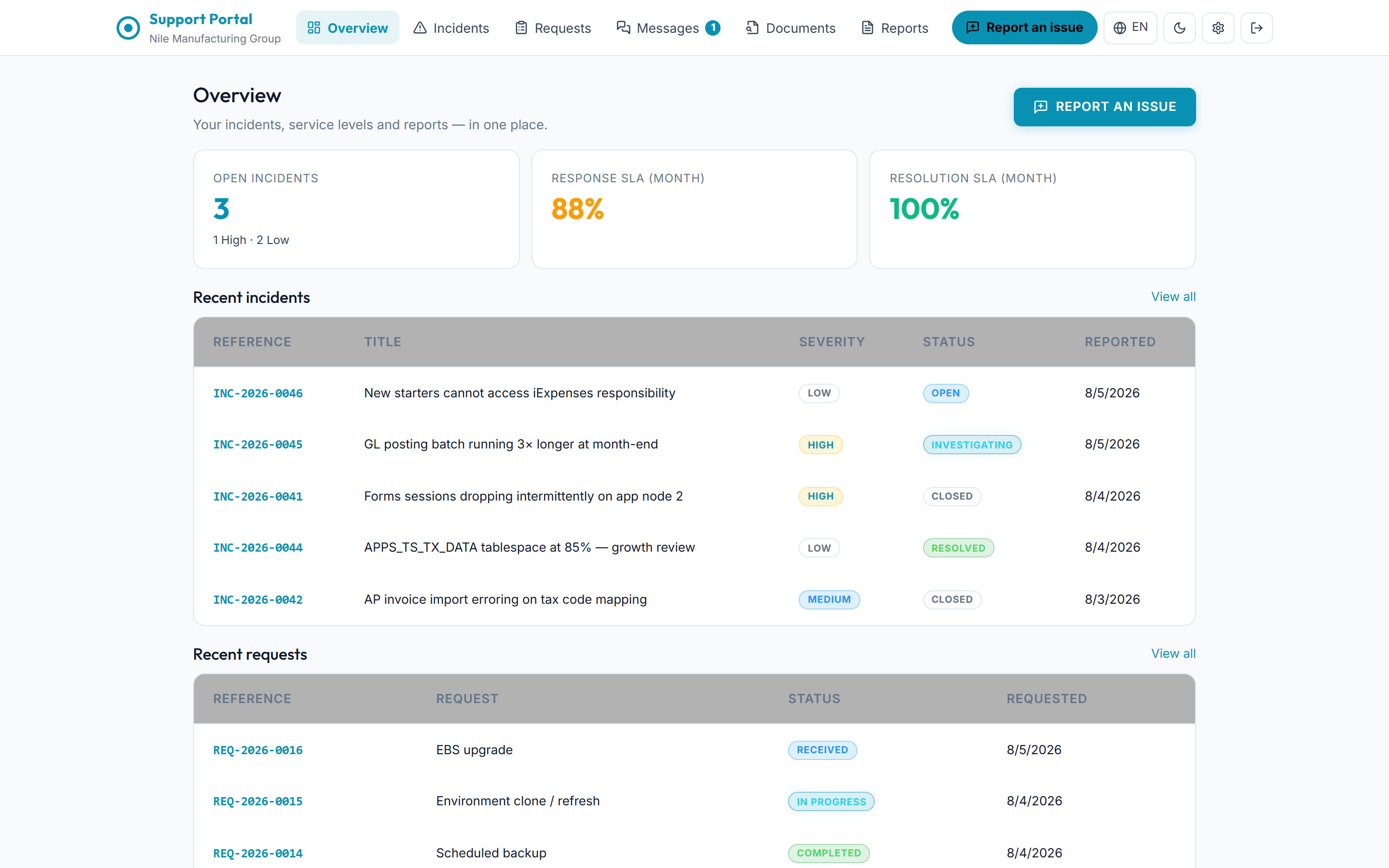
Nine productized request types: health check, backup, clone, patching, upgrade, DR drill, archive and purge, restart, and month-end close. Each carries live status you can watch.
Every completed run publishes a branded report to your portal: health scorecards, backup and restore evidence, upgrade outcomes, DR results with RTO timing, and close reconciliation summaries.
Open incidents carry deterministic severity, progress you can follow, and root-cause analyses you can read. Visibility into the work, not just the outcome.
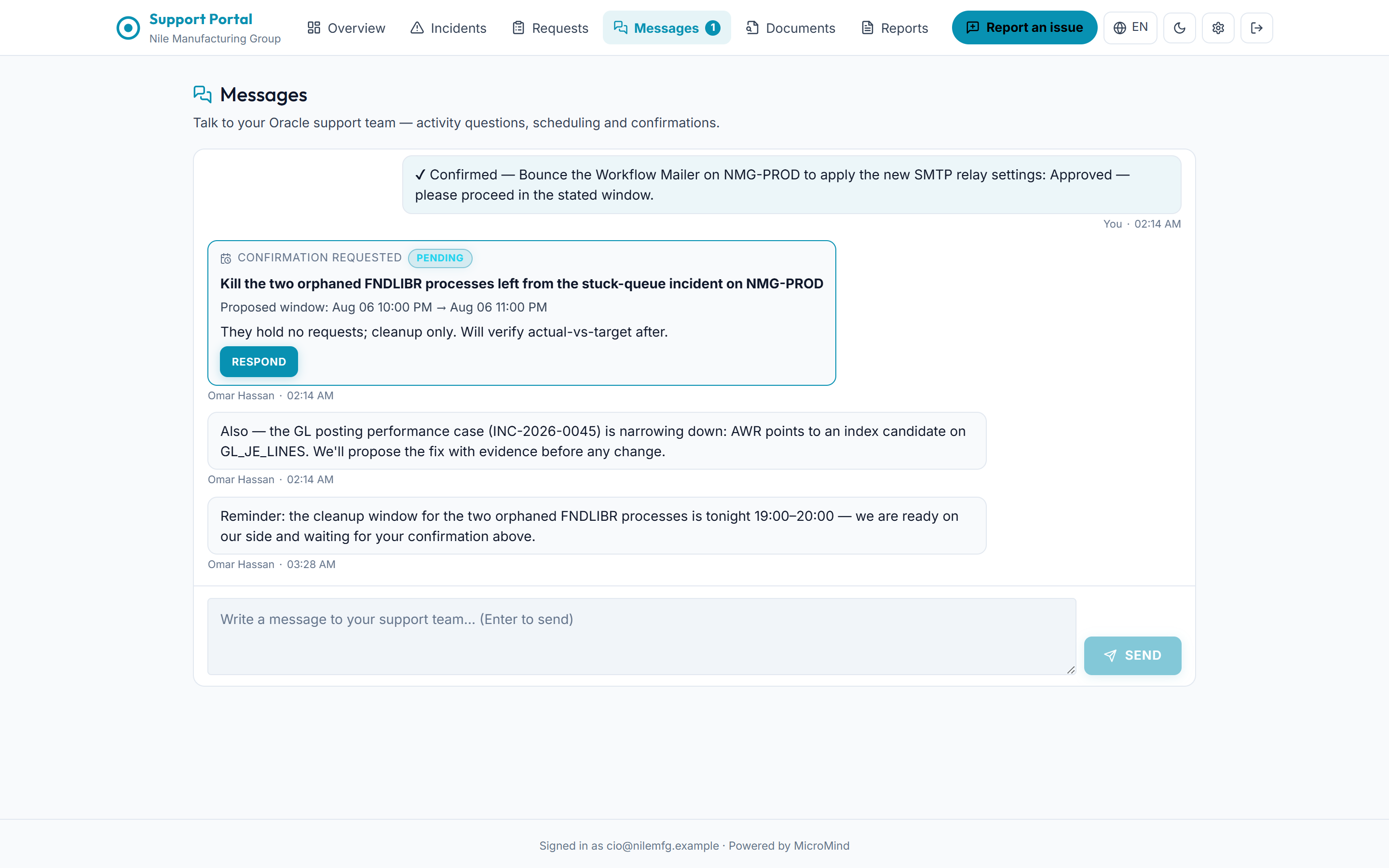
A direct conversation with your engineering team, including structured confirmation requests: the engineer proposes an action and a window, you confirm or decline, and the response is recorded with name and time.
Email notifications with per-kind preferences, an in-portal bell, and two-factor authentication on your account.
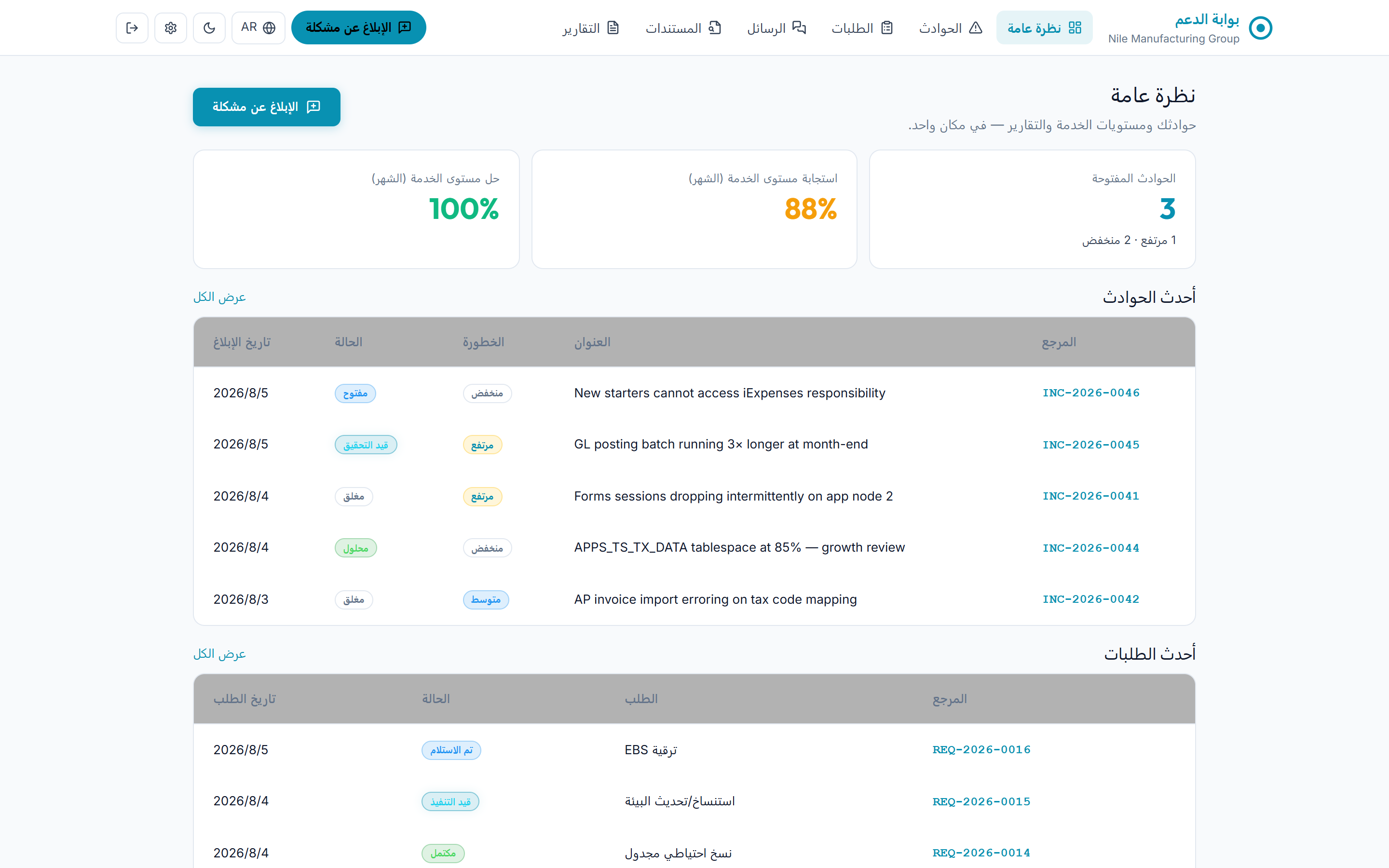
The portal and every communication in Arabic or English, with right-to-left treated as a first-class experience rather than an afterthought.
The confirmation loop
A destructive step does not run because someone assumed it was fine. It runs because a named person approved it, in writing, at a recorded time, and the record survives the run.
Replay-proof, and readable a year later
Arabic first
Every screen, every notification and every published report exists in Arabic and in English. Right-to-left is not a stylesheet applied late; it is how the product was built.
Our side of the platform
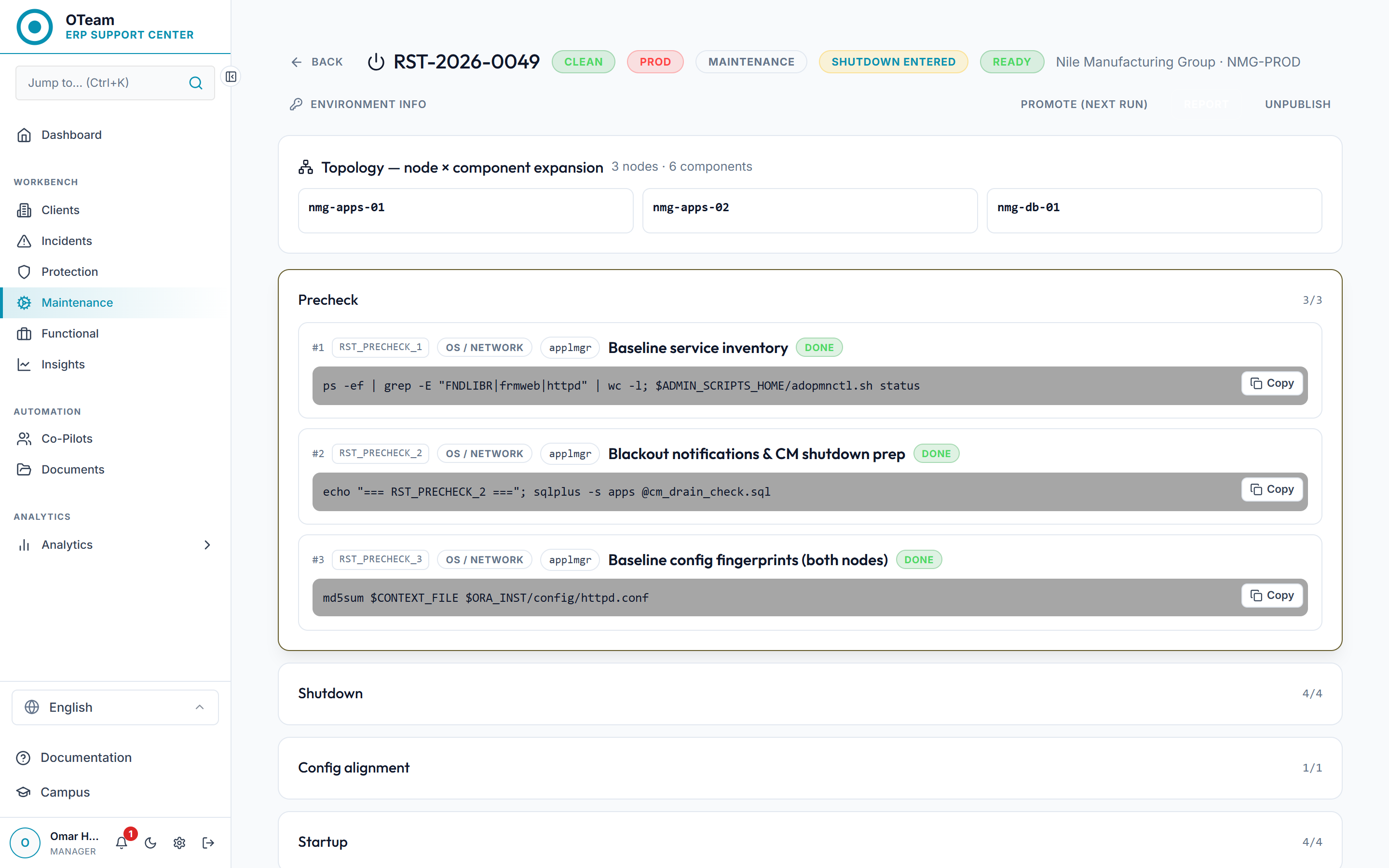
What your support team actually works in. This is why the portal has something real to show you.
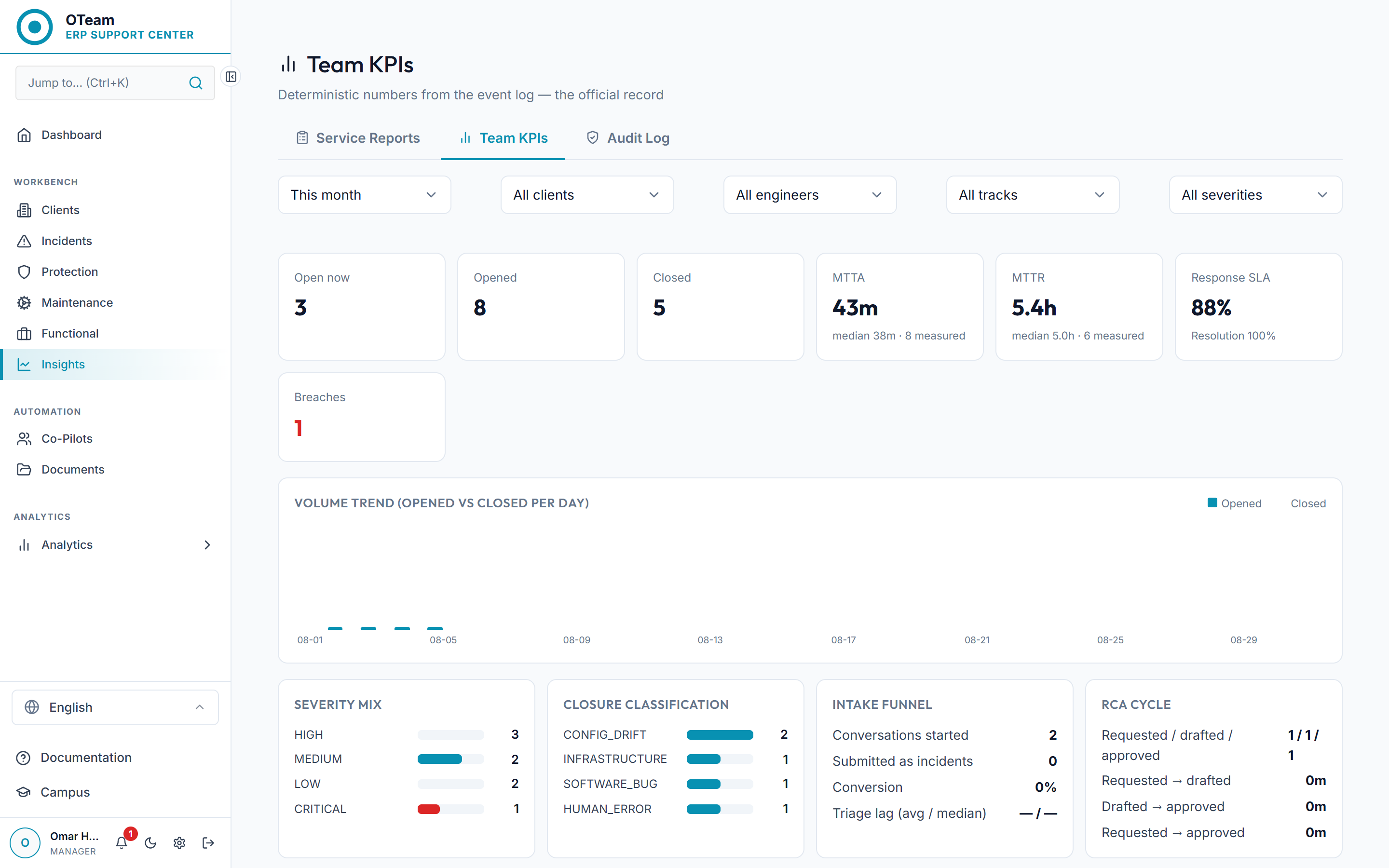
Incident severity is computed by code from the facts of the incident. The AI proposes diagnosis and drafts; it cannot set or change severity, scores, or go/no-go decisions.
Each with readiness gates scored from real command evidence, destructive-step confirmation, safe-state rules, and rehearsal then promotion: a proven run becomes the template for the next one.
Client environments documented as structured passports. Credentials encrypted in a vault and referenced by label, never typed into chat and never echoed by anyone.
Pasted logs and uploads are scrubbed of credentials before storage and before any AI processing. Secrets don’t reach models by architecture, not by policy.
Why it’s different
See it, don’t take our word
Thirty minutes: the portal, a live runbook, and a published report, on the real platform rather than on slides.